
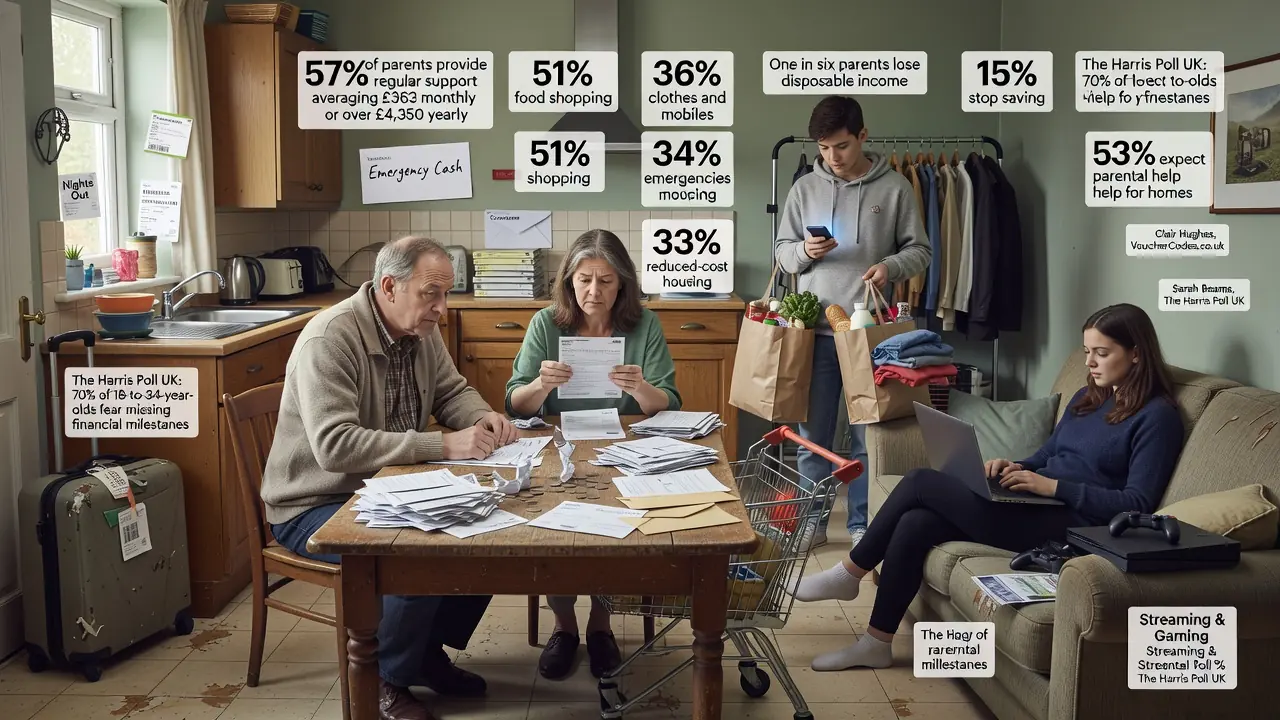
A new survey of British families suggests that parental financial support now runs far beyond childhood. Many parents report covering everyday costs for children aged 18 to 35, often at a significant cost to their own savings.
What the research found
Research from VoucherCodes.co.uk found that 57% of parents with children aged 18 to 35 still provide regular financial support. On average, these parents spend £363 a month, or more than £4,350 a year. The most common help is with food shopping (51%), followed by clothes (36%), mobile phones (36%), emergency expenses (34%) and rent-free or reduced-cost living at home (33%). Some parents also pay for holidays, streaming subscriptions, nights out, concert tickets and gaming consoles.
The support carries costs. One in six parents says it reduces their own disposable income, and 15% have stopped adding to their savings. Still, 52% describe such help as a normal part of parenthood, although 79% became financially independent by about age 24.
Why the pattern is changing
Clair Hughes, a savings expert at VoucherCodes.co.uk, argues that the arrangement has shifted from an occasional favor into a fixed monthly expense for many families. She links this to wages and savings that stretch less far than they once did, rather than to young people wanting more. A separate survey by The Harris Poll UK found that 70% of adults aged 18 to 34 worry they will not reach key financial milestones, and 53% believe they will never afford a home without parental help.
Sarah Beams, managing director of The Harris Poll UK, notes that many parents are helping their children maintain their current lifestyles, not just get ahead. She cautions that this reliance does not necessarily reflect complacency or low ambition among younger adults.
Practical steps for parents
Agree on boundaries early, deciding which costs you will cover, such as food or bills, and which the adult child should pay, such as holidays or gaming equipment.
Consider smaller, regular contributions rather than saving for one large milestone, as Beams suggests.
Look for cheaper ways to cover expenses, such as using discount codes, buying clothing second-hand or reviewing phone and streaming plans.
Teach budgeting and open conversations about money, so support becomes a stepping stone rather than a long-term dependency.
Revisit the level of help periodically as your child's income and circumstances change.
The research comes from surveys commissioned by the organizations named above and reflects their findings and interpretations. Its figures describe parents' reported behavior and attitudes, not verified household accounts, so they should be read as indicators of a broader trend rather than precise national measures.